Skulle indløse et gavekort til en gave jeg fik sidste år. Sitet krævede en email, og fik en burner-email oprettet til formålet.

Efterfølgende har de bevist hvorfor den slags er nødvendigt. Er blevet tæppebombet med emails siden jeg indløste gavekortet.

Trykker "unsubscribe" i en af dem, og ender på vedhæftede side hvor jeg erfarer, at jeg åbenbart abonnerede på 6 forskellige "nyhedsbreve" da jeg tillod mig at indløse mit gavekort.

Vig bort!

Skærmbillede af en nyhedsbrevsabonnementsside, hvor man kan afmelde 6 nyhedsbreve. Det gjorde jeg så.

Listen Broken Record: Dave Hill and the Epistemology of Norwegian Black Metal

One of the most entertaining episodes of Broken Record I've come across. My first encounter was back in 2018 when it came out, and hearing it again now still brings a smile to my face.

Dave Hill is awesome.

From the description on https://www.pushkin.fm/podcasts/broken-record/dave-hill-and-the-epistemology-of-norwegian-black-meta...

Malcolm Gladwell sits down with comedian, guitarist, and legendary metalhead Dave Hill, as he recounts how an email exchange between his alter ego Lance and a Norwegian black metal impresario named Saiitham (pronounced “satan”) led to the formation of the darkest metal band of all time. Dave Hill also performs a mediocre rendition of “Hammer Smashed Face,” plus we debut his single “Are You Ready (to Black Metal)?”

By Malcolm Gladwell, Dave Hill

Min første email, næsten

I 1996 var jeg i Hong Kong. Jeg havde været hjemmefra i 10-11mdrs tid, og kommunikerede hjem til København vha breve, som jeg skrev på stort set hver dag, og sendte omtrent en gang om måneden. Jeg modtog nyheder hjemmefra ved at besøge hovedpostkontoret (General Post Office - GPO) i nogle fastlagte byer langs min vej, som min familie og venner kunne sende post til. Det betød at jeg også fik post hjemmefra cirka en gang om måneden.

I Hong Kong stødte jeg for første gang på en internetcafe og tænkte, at jeg da kunne sende en email til min far, som var den eneste jeg kendte på det tidspunkt, der havde en emailadresse. Vildt fedt, det ville han nok blive begejstret over, tænkte jeg.

Jeg fik en computer på cafeen, en af de ansatte startede noget software (jeg tror det var Netscape Communicator, men kan se den først lige udkom i beta i april 1996, så det er måske lige utroligt nok til at være sandt), og jeg satte mig til rette for at komponere min email.

Jeg beskrev i blomstrende prosa mine eventyr i Oceanien og i Østen. Malende beskrivelser af Australien, Indonesien, Malaysia, Brunei, og Singapore. Om duftene, maden, menneskene, og vejret, som jeg vidste min far gik meget op i, og jeg sad der vel i 45min og skrev lystigt. Da jeg havde fået afsluttet min fortælling indtastede jeg min fars email som modtager, udfyldte emne-feltet, og trykkede send.

Der skete ikke noget, Communicator sagde den forsøgte at kontakte min emailudbyder. Det forsøgte den i et stykke tid, hvorefter den gav op. Hmm, jeg prøvede at trykke 'send' igen. Det samme skete. Jeg kaldte en af de ansatte over til min plads, og spurgte hvorfor den ikke ville sende den omfattende email jeg havde forfattet. "Har du indtastet din email, og din emailudbyders serverdetaljer?" spurgte den ansatte.

Det havde jeg ikke, for jeg havde ingen af delene. Og det var således jeg lærte, at for at sende en email, skal man selv have en emailadresse. Min første email fik jeg først sendt da jeg startede på universitet i september 1997, og senere samme år fik jeg internet hjemme. Desværre kan jeg ikke lige umiddelbart huske hvilken email der rent faktisk var min første, og egentlig er historien om hvad der kunne have været min første email, uden tvivl også bedre.

Ja, ved hjælp af https://brid.gy (en detalje jeg glemte i mit tidligere opslag (: ) kan jeg hive kommentarer og reaktioner på mine opslag tilbage på min hjemmeside. Jeg får også en email fra min hjemmeside, når brid.gy finder nye ting den har tilføjet til opslag på min hjemmeside: https://i.imgur.com/h3Z0GBP.png.

I enjoyed reading this as well, email has indeed been a very resilient technology for the last 50 years. I've been following https://delta.chat/ for a while, and it's really a clever way to build a service on top of email.

Breaking Tech Open: Why Social Platforms Should Work More Like Email - The Reboot

How to respond to Corona misinformation

There's a lot of misinformation about the current SARS-CoV-2 outbreak being shared in the silos of messaging apps. This means it's harder to search for them in an attempt to verify their validity. People who share them aren't doing it to cause harm, quite the opposite, they are sharing them because they believe it will help their friends and loved ones.

Various claims about drinking hot water, gargling with a hot water saline solution, and going into the sun are all things that hasn't proven to do anything in terms of avoiding getting the virus, or alleviating it if you are already infected.

If your friends or family share these things with you on chats or email, please tell them that none of these things are proven to work, and that the consequences of following the advice from these copy/paste jobs vary from mostly harmless (drink hot drinks), to potentially harmful to you or others (if you have a runny nose, then you don't have coronavirus).

There's a few things you can do to respond in a way that can help convince them these statements are not true, and that they should stop sharing them as if they are. One of them is pointing them to one of the many sites that are debunking the claims with supported material and science:

Stay safe, stay home and help stop the rumors and the outbreak from spreading.

Flawed American Express card registration process

Tried to activate an American Express credit card, via the American Express Android app today. Turned into a field study of assholedesign. I wonder if anyone from their customer service team, or their developers ever tried to follow the sign-up flow themselves.

Issue #1 - Secret rules

The fields the user needs to fill out, has no guidance on what qualifies as a valid input. I put in a username, and a password I deemed safe to use.

The app told me the following:

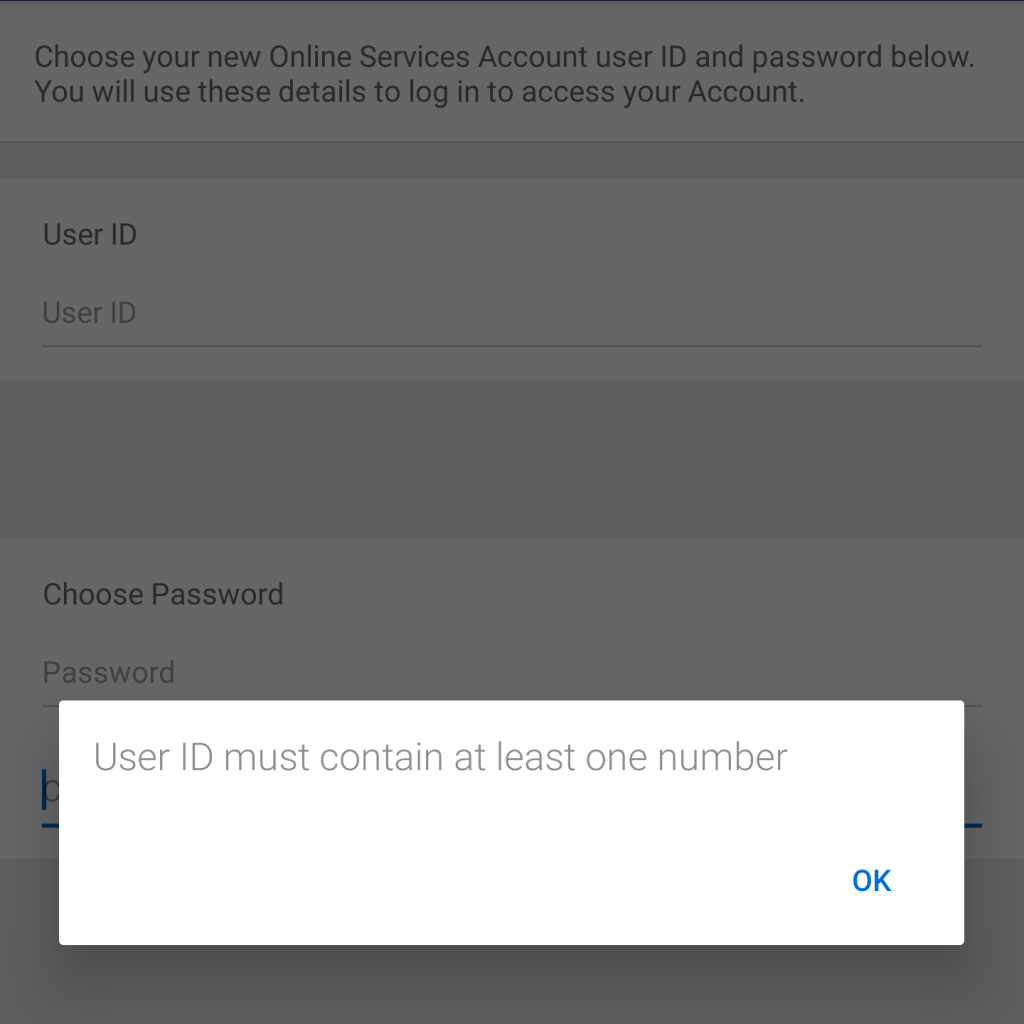
Error message from AMEX signup on Android App

"User ID must contain at least one number."

Ok. I add a number to my login and that worked. It wasn't clear I had to from the beginning.

Issue #2 - More secret rules

I then type in a password. It's 11 characters long, and includes one number, and one special character. That mix usually works.

The app tells me:

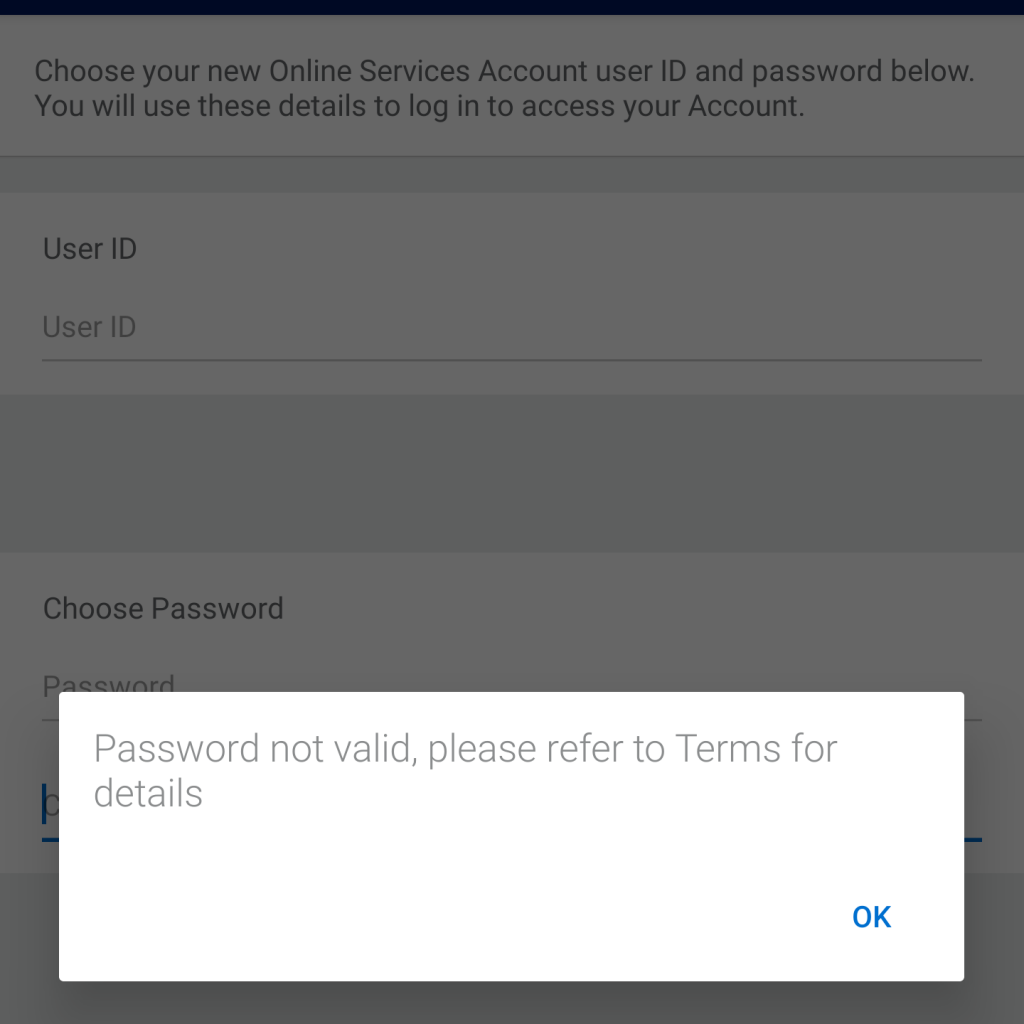
Password not valid, refer to Terms for details

"Password not valid, please refer to Terms for details."

What's wrong with writing the requirements in the error message or, and I know or it sounds a bit crazy, right next to the field you need to fill it into (like the Norman Nielsen Group has told us since 2015). At least they could have included a link to the "Terms" where these sacred details can be found. Anyway, I ended up getting a generated one from KeePass, but I still don't know what they rules are for their password.

Issue #3 - Dark design pattern

For the final example, this is how their marketing box looks like:

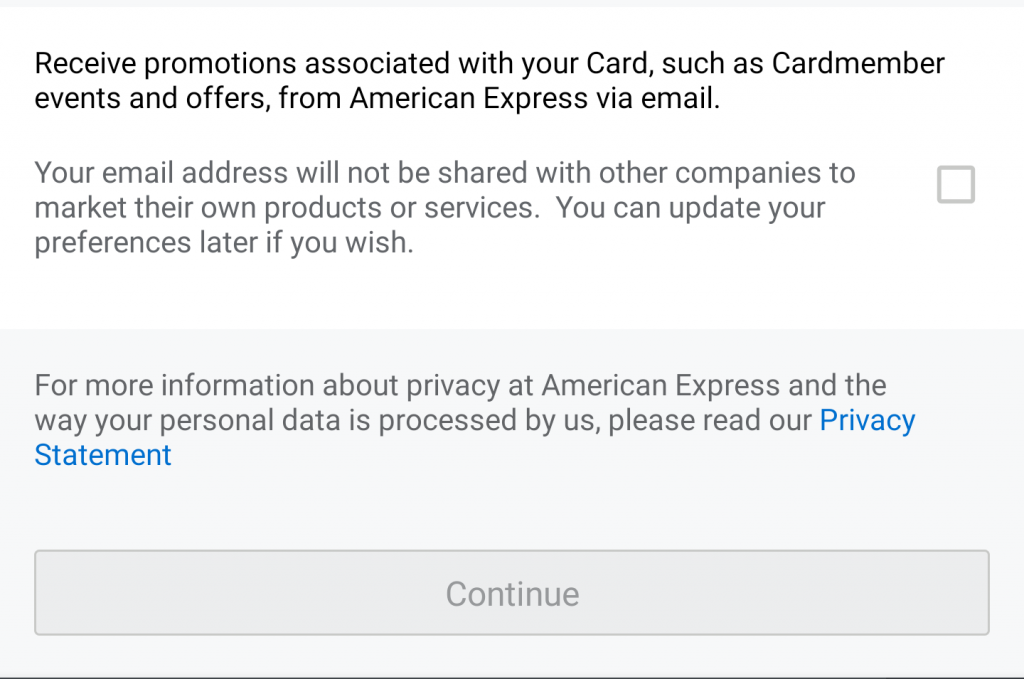
Image showing checkbox next to text which is counter to user understanding.

Notice how the promotions opt-in checkbox is next to the text saying:

"Your email address will not be shared with other companies to market their own products and services. You can update your preferences later if you wish."

This gives the impression that by checking the box, you agree to them not giving out your email address to other companies, while checking it opts you in, to receiving email promotions from American Express.

If you are designing a sign-up form for anything, please don't make me guess what I can put into the fields. It's a bad user experience that, with just a modicum of thought and testing, could be turned into a great experience. 


Consuming Instagram differently

I've been looking for a different way of consuming Instagram. Facebook has introduced more and more features in their neverending quest to wrestle users from Snapchat and onto Instagram, and I don't care for those. I like Instagram, the photo sharing part, not so much the TV and Stories part. The other reason is that whole privacy thing, of course. Turns out big social media players weren't quite the stewards of our personal data we were hoping for, and spending less time on actual social media websites seems like a good thing.

Except for some musicians and photographers, I don't follow brands on Instagram. I mainly follow people I know. Family, friends, and tags. Being a camera and photo enthusiast, I enjoy looking at photos taken with a variety of cameras and film, and a lot of people use Instagram to show their analogue makings.

For a while I used an app called Hermit on Android. Hermit is a wrapper that turns mobile web versions of websites into apps. It has ad blocking, and a bunch of other nice features. Using Hermit helped me get rid of ads on Instagram, and their algorithm somehow works differently on there as well. I liked the ordering better, it seemed to be more chronological. Only downside: I had to consume it on my phone. It was good, but not great.

Granary.io and Atom to the rescue

Thankfully, people much smarter than me are creating tools for consuming silo'ed social media in different ways. One such tool is Granary.

To be able to get the feed of your friends, and not the feed of your own damn self, you need to find your sessionid cookie value from Instagram. Do the following:

Edit: There's actually a much easier way to do the below, by using https://instagram-atom.appspot.com/ - thanks to Ryan for pointing it out.

  • Open the Chrome Browser
  • go to instagram.com and login with your account
  • after logging in, open the developer console of your browser, and reload the page
  • find the "Application" tab and click it
  • in the left hand panel there's a "Cookies" item, click the chevron to the left of it to expand it
  • click on the line that says https://www.instagram.com
  • in the list of cookies like csrftoken, ig_cb, mid, and rur, there should also be a cookie called "sessionid"
  • copy the value of sessionid

Next, open Granary.io, and click on the Instagram logo. Granary will load up this url, and then you have to fill out some fields. You need to fill in your Instagram username, select @friends from the dropdown, select "atom" as your format, and paste the cookied ID you gathered above, into the last field where it says sessionid cookie (for @friends) and hit the GET button.

When Granary has done its thing, you'll end up with a link below the form. With the cookie value removed, mine looks like this:

https://granary.io/instagram/l3traset/@friends/@app/?format=atom&cookie=

This link holds your liberated Instagram photo feed. I plugged mine into my Feed Reader and into Aaron Parecki's Aperture and now I can read my Instagram feed on my phone using Indigenous, and on my desktop, all with no ads and no stories. Glorious!

Is anything lost?

Besides losing the ads and stories, you also lose the ability to favourite a post on Instagram, and to add comments to a post. However, I don't necessarily see this as a loss. If I want to Like a post, I can just do it on my own personal feed, and it ends up looking like this. Sure, if it's a post from a friend of mine, they won't know from their post, that I liked it. But you know how you can fix that? Write them an email. If your feed reader lets you email a post, you can email your friend saying you liked their picture.

Not being able to comment might be the biggest loss, but if you can live with that, then I think you should do it, go forth and liberate your Instagram feed.

This will definitely be the way I will consume Instagram until we've all moved over to Pixelfed.

P.S. I'm not sure how long the sessionid cookie lives for, so you might have to reconstruct the link in Granary once in a while, but that should be about it. Also, don't share that sessionid with anyone. I'm pretty sure it can be used to log into Instagram as you.

Yes, I noticed the email that Known sends to let me know that someone interacted with my post, had the quoted content and your comment mixed into one paragraph. Not sure where or how to fix that, but it could be that you need to deploy the fix you mention to more post types.

Got an email in my inbox for an event. In the marketing text, this section is included

"[...] and most importantly, amazing instagram photos to make your friends have serious FOMO."

That's when I instantly know, that I'm not supposed to go to this event.

← An IndieWeb Webring 🕸💍 →

Jonas Voss